CN
-
Service Hotline
15766086363

Release Date:Nov 19, 2026
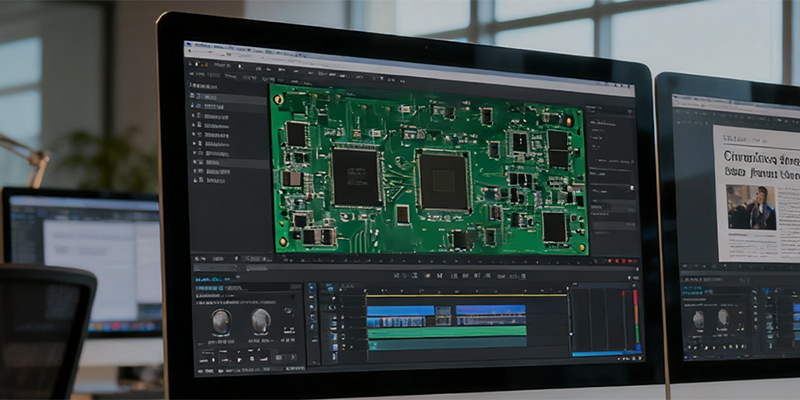
Sensor board PCB cloning is a professional reverse engineering service for various sensing detection circuit boards, covering temperature, pressure, humidity, photoelectric, ultrasonic, infrared, and industrial sensing modules, widely used in intelligent detection, industrial automation, smart medical, and environmental monitoring fields. The quotation of sensor board PCB clone is determined by sensing circuit precision, board structure complexity, weak signal processing design, and component miniaturization degree, with precise pricing for low-precision civilian sensors and high-precision industrial sensors respectively. The core feature of sensor boards is weak signal acquisition and amplification processing. Most sensor boards have the characteristics of miniaturization, high integration, and high precision. Civilian low-precision sensor boards mostly adopt double-layer and 4-layer structures, while industrial high-precision sensor boards usually use 4-6-layer multilayer boards, with ultra-fine trace wiring and miniaturized patch components, increasing the difficulty of reverse scanning and circuit restoration.
In terms of service pricing, ordinary civilian sensor boards such as household temperature and humidity sensors and ordinary photoelectric sensing boards have simple circuit structures, single signal processing logic, low component density, and low cloning cost, suitable for small-batch copying and replacement production. Industrial-grade medium-precision sensor boards such as pressure sensors and ultrasonic sensing detection boards integrate signal amplification circuits, filtering circuits, and analog-to-digital conversion modules, with complex circuit logic and high requirements for signal restoration precision. The cloning process needs to accurately restore the weak signal capture ability of the original board, and the quotation is moderately increased. High-end precision sensor boards used in medical equipment, aerospace detection, and high-precision industrial monitoring have extremely strict requirements for circuit stability and detection precision. Such boards are equipped with high-precision operational amplifier circuits, noise reduction circuits, and temperature compensation circuits, with miniaturized chip components and dense wiring, requiring ultra-high-precision scanning equipment and professional circuit calibration technology, so the service quotation is higher.
In addition, special sensor boards such as flexible sensor boards and high-temperature resistant sensor boards need special substrate materials and production processes, which will generate additional process fees. Our sensor board cloning service strictly restores the signal detection range, precision, response speed, and anti-interference ability of the original board. After cloning and production, we conduct professional performance testing to ensure that the sensing data error is within the industrial standard range. We support single-piece proofing and batch mass production, with flexible quotation mechanisms, and can provide customized pricing plans according to customer functional requirements and order quantity, bringing cost-effective reverse engineering and board making services to customers.

Email: 15361682656@163.com
Factory: Room 703, Kelunte R&D Building, No. 1 Ganli 5th Road, Jihua Street, Longgang District, Shenzhen City