CN
-
Service Hotline
15766086363

Release Date:Aug 17, 2026
PCB clone Gerber file export is a core technical link in the whole process of PCB reverse engineering and cloning production. Gerber file is the standard universal format for PCB manufacturing in the global electronic industry, which contains all the production and processing data of PCB boards, including circuit layer patterns, solder mask layers, silk screen layers, outline layers, drilling layers, and electrical isolation parameters. Accurate Gerber file export is the key bridge connecting PCB reverse analysis and factory batch production, and the accuracy, completeness, and standardization of exported Gerber files directly determine the production quality and yield of cloned PCB boards. Mastering professional PCB clone Gerber export technology is an essential capability for high-precision PCB reverse engineering.
The whole process of PCB clone Gerber file export is based on the complete reverse data modeling of the original PCB board. In the early stage, through layer stripping, high-definition scanning, microscopic detection, and data calibration of the original board, the accurate 1:1 digital model of the PCB board is established in professional PCB design software (such as Altium Designer, Cadence, KiCad). The digital model includes all structural and electrical information of the PCB, including trace width, line spacing, pad size, via hole aperture and position, component layout, silk screen characters, board outline, and tolerance parameters. On the basis of ensuring the 100% consistency of the digital model and the original board, the standardized Gerber file export operation is carried out.
Different types of PCB boards have different Gerber export standards and parameter settings, especially for high-precision boards such as high TG boards, Rogers high-frequency boards, ceramic substrates, and thick copper boards, which need targeted export parameter configuration. In terms of precision setting, the Gerber file resolution is uniformly set to 0.001mm high precision to meet the processing requirements of fine lines and micro-vias. For high-frequency boards, it is necessary to separately export the impedance line layer, grounding layer, and signal isolation layer, and retain the special process parameters of high-frequency circuits. For thick copper boards, the copper thickness parameter and large-area copper-clad processing parameters are annotated in the Gerber file to facilitate the factory’s targeted etching and lamination production.
In the export process, hierarchical independent export must be carried out according to the standard PCB layer definition, including top circuit layer, bottom circuit layer, middle inner layer, top solder mask layer, bottom solder mask layer, top silk screen layer, bottom silk screen layer, board outline layer, drilling layer, and solder paste layer. Each layer of the Gerber file needs to be named and classified uniformly to avoid layer confusion during factory production. At the same time, the drilling file (NC file) is exported synchronously, which accurately records the position, aperture, and hole type of all through holes, blind holes, and buried holes, and matches the circuit layer one by one to ensure the accuracy of subsequent drilling and metallization processes.
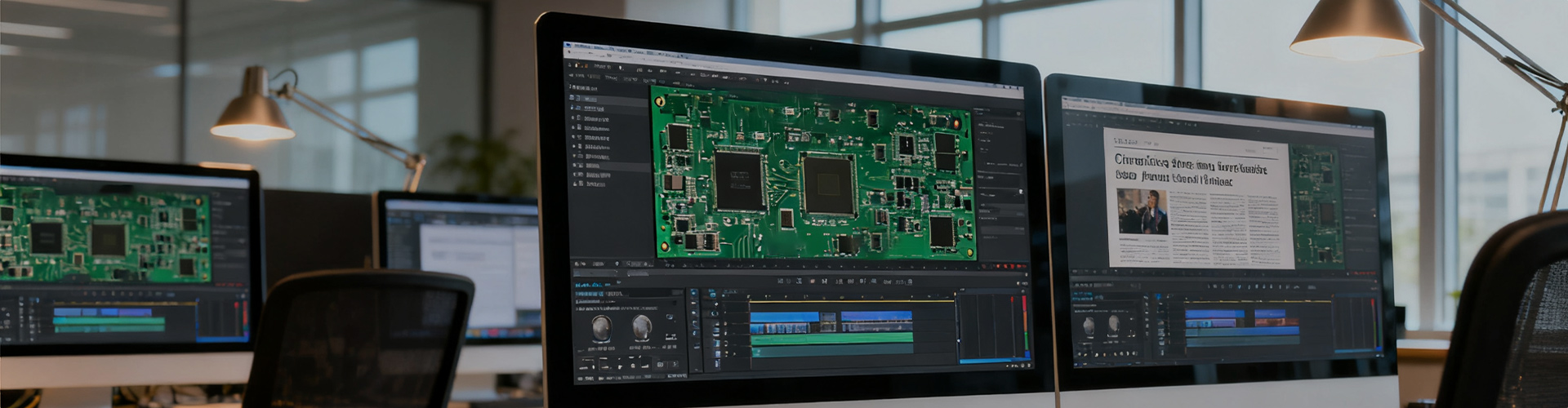
After the completion of Gerber file export, professional file verification and error correction are required. First, use Gerber viewing software to check the integrity of each layer of graphics, confirm that there are no missing lines, missing pads, graphic distortion, and layer dislocation problems. Second, check the electrical connectivity of the circuit, verify that the short circuit and open circuit settings are consistent with the original board, and eliminate data errors caused by software conversion. For high-precision cloned boards, secondary calibration of fine lines, micro-vias, and special process structures is required to ensure that the exported Gerber files fully meet the factory’s high-precision production standards.
Standardized PCB clone Gerber file export can realize seamless docking between reverse engineering data and industrial production. The exported Gerber files can be directly used for PCB factory plate making, processing, and batch production, avoiding data distortion and process errors caused by manual data transmission. At the same time, standardized Gerber files have universal compatibility, which can adapt to the production equipment and process standards of different PCB manufacturers, greatly improving the production efficiency and product consistency of cloned boards. This link is an indispensable core step to realize the industrialization and batch production of PCB clone technology.

Email: 15361682656@163.com
Factory: Room 703, Kelunte R&D Building, No. 1 Ganli 5th Road, Jihua Street, Longgang District, Shenzhen City