CN
-
Service Hotline
15766086363

Release Date:Aug 18, 2026
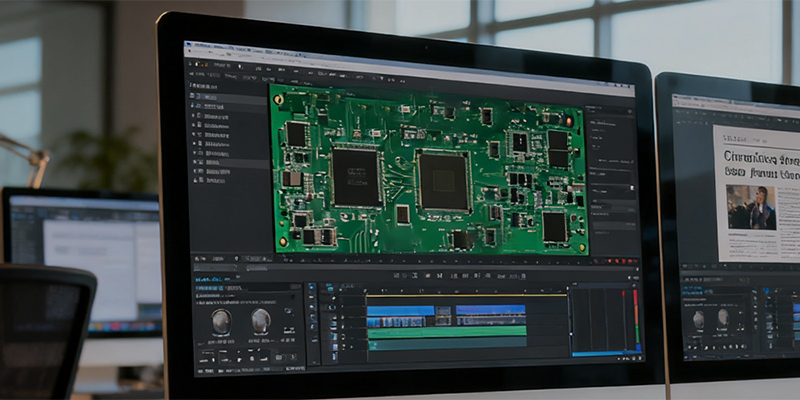
PCB clone coordinate file export is a core auxiliary process in PCB reverse engineering and mass production, which focuses on extracting accurate positional data of all components, pads, holes, and structural features on the copied PCB to generate standard coordinate files compatible with SMT production equipment. In the entire PCB cloning workflow, the coordinate file serves as the bridge between reverse design and automated assembly, directly determining the precision of surface mount component placement and the yield rate of mass production. Unlike ordinary PCB design coordinate output, the coordinate file derived from PCB clone is completely based on the physical size and actual layout of the original sample board, eliminating design deviation caused by schematic theoretical design errors, and realizing one-to-one data restoration of the original board’s component position parameters.
The whole process of exporting coordinate files via PCB clone includes multiple precise operation steps. First, professional technicians conduct high-precision scanning and measurement of the original PCB sample using industrial-grade high-resolution optical scanners and 3D coordinate measuring instruments. The equipment captures the two-dimensional plane coordinates (X, Y axis) and rotation angle (R angle) of each electronic component, including resistors, capacitors, inductors, integrated circuits, connectors, and special structural devices. Meanwhile, it accurately records the center coordinates of SMT pads, the positional offset of through-hole components, and the coordinate parameters of fiducial marks for PCB positioning. In the cloning process, technicians need to calibrate the board’s origin coordinate uniformly, eliminate the error of manual measurement and equipment scanning, and correct the coordinate deviation caused by PCB substrate warpage and production tolerance of the original sample.
After completing data collection, the system sorts, classifies and cleans the coordinate data, and eliminates invalid data points such as empty pads, redundant test points and discarded component positions on the original board. Then, standard coordinate file formats are generated according to production requirements, including common formats such as TXT, CSV, Excel, and Gerber coordinate attachment formats compatible with mainstream SMT machines. Each data entry in the file contains complete parameter information: component model, component package, X-axis coordinate, Y-axis coordinate, rotation angle, layer information (top layer/bottom layer), placement offset correction value, and component mounting priority. For high-precision PCBs such as high-density interconnection boards (HDI), multi-layer communication boards and automotive electronic PCBs, the coordinate file will also add fine calibration data for tiny components such as 0201, 01005 packages and BGA, QFN pin arrays to ensure the placement accuracy error is controlled within ±0.01mm.
The exported PCB clone coordinate file has wide industrial application value. In SMT automated production, the coordinate file can be directly imported into placement machines, solder paste printers and automatic optical inspection (AOI) equipment to realize fully automated component mounting, which greatly improves production efficiency and consistency compared with manual positioning. For PCB reverse engineering verification, the coordinate file can be compared with the original board’s physical layout to check whether the cloned PCB layout is completely consistent with the sample, effectively avoiding position deviation of key components that may cause electrical performance failure. In addition, the coordinate file also provides accurate data support for subsequent PCB assembly process optimization, production fixture design, and after-sales maintenance and component replacement. It is an indispensable basic data file for realizing zero-difference replication and mass production of cloned PCBs, and its data accuracy directly affects the electrical performance, assembly efficiency and service life of the final finished circuit board.

Email: 15361682656@163.com
Factory: Room 703, Kelunte R&D Building, No. 1 Ganli 5th Road, Jihua Street, Longgang District, Shenzhen City