CN
-
Service Hotline
15766086363

Release Date:Oct 09, 2026
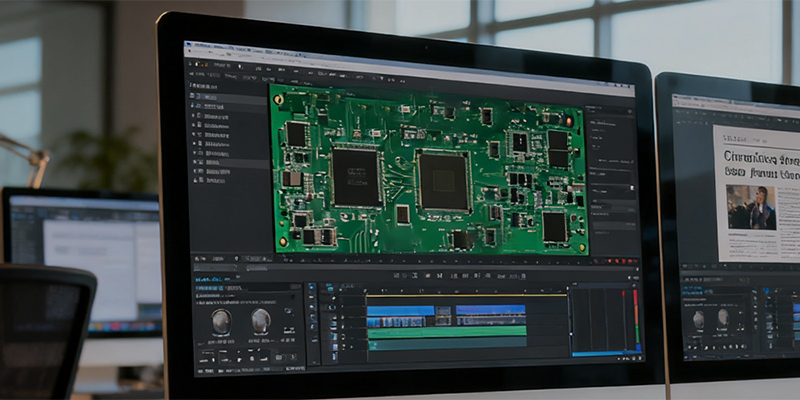
In today's fast-paced electronics industry, speed and accuracy are two of the most critical factors when bringing a product to market or sustaining an existing one. A fast turn PCB clone service for electronics is designed specifically to meet these demands by delivering accurate replicas of existing printed circuit boards in the shortest possible timeframe without compromising quality. Whether you are dealing with an obsolete product, a legacy system, or a competitor's board that needs to be reproduced for benchmarking, a rapid cloning service can save weeks of development time and significant engineering costs. These services typically begin with high-resolution scanning and layer-by-layer analysis of the physical board, followed by precise reconstruction of the schematic and layout. The result is a functional clone that matches the original in performance, form factor, and reliability.
The process of fast turn PCB cloning involves several tightly coordinated steps. First, the physical board is carefully de-layered, photographed, and scanned to capture every trace, pad, via, and silkscreen element. Engineers then reconstruct the netlist and component placement using specialized reverse engineering software. In parallel, the bill of materials is extracted and cross-referenced with available components, and any obsolete parts are identified with suitable alternatives. Because time is of the essence, fast turn services often run multiple engineering tasks simultaneously—schematic capture, layout reconstruction, and component sourcing—rather than sequentially. This parallel workflow, combined with experienced engineers and automated verification tools, allows a functional clone to be produced in days rather than weeks.
One of the main advantages of a fast turn PCB clone service is its ability to support urgent production needs. Many companies face situations where the original manufacturer no longer supplies a board, or where internal design files have been lost due to data corruption, staff turnover, or outdated storage systems. In such cases, a fast turn clone becomes the only viable path to keep production lines running. These services are also valuable for aftermarket repair businesses, research institutions, and startups that need a proven reference design to accelerate their own development. By delivering a fully tested and verified clone, the service provider ensures that the customer can move directly into prototyping or small-batch production without additional design iterations.
Quality control is embedded throughout the fast turn cloning process. After the layout is reconstructed, the design undergoes DFM (Design for Manufacturing) analysis to catch potential fabrication issues such as trace spacing violations, annular ring problems, or solder mask slivers. Electrical rules checking (ERC) and layout versus schematic (LVS) comparisons are performed to guarantee that the cloned design is electrically identical to the original. Once the boards are fabricated and assembled, functional testing is conducted under real operating conditions to verify performance. Only after passing these checks is the final design released to the customer, typically in the form of Altium files, Gerber data, and drill files.
In conclusion, a fast turn PCB clone service for electronics is an essential resource for companies that need to reproduce circuit boards quickly and reliably. By combining reverse engineering expertise, streamlined workflows, and rigorous testing, these services deliver clones that are functionally equivalent to the original and ready for immediate use. Whether the goal is sustaining legacy equipment, recovering lost designs, or accelerating a new project, fast turn cloning offers a practical and cost-effective solution.

Email: 15361682656@163.com
Factory: Room 703, Kelunte R&D Building, No. 1 Ganli 5th Road, Jihua Street, Longgang District, Shenzhen City